
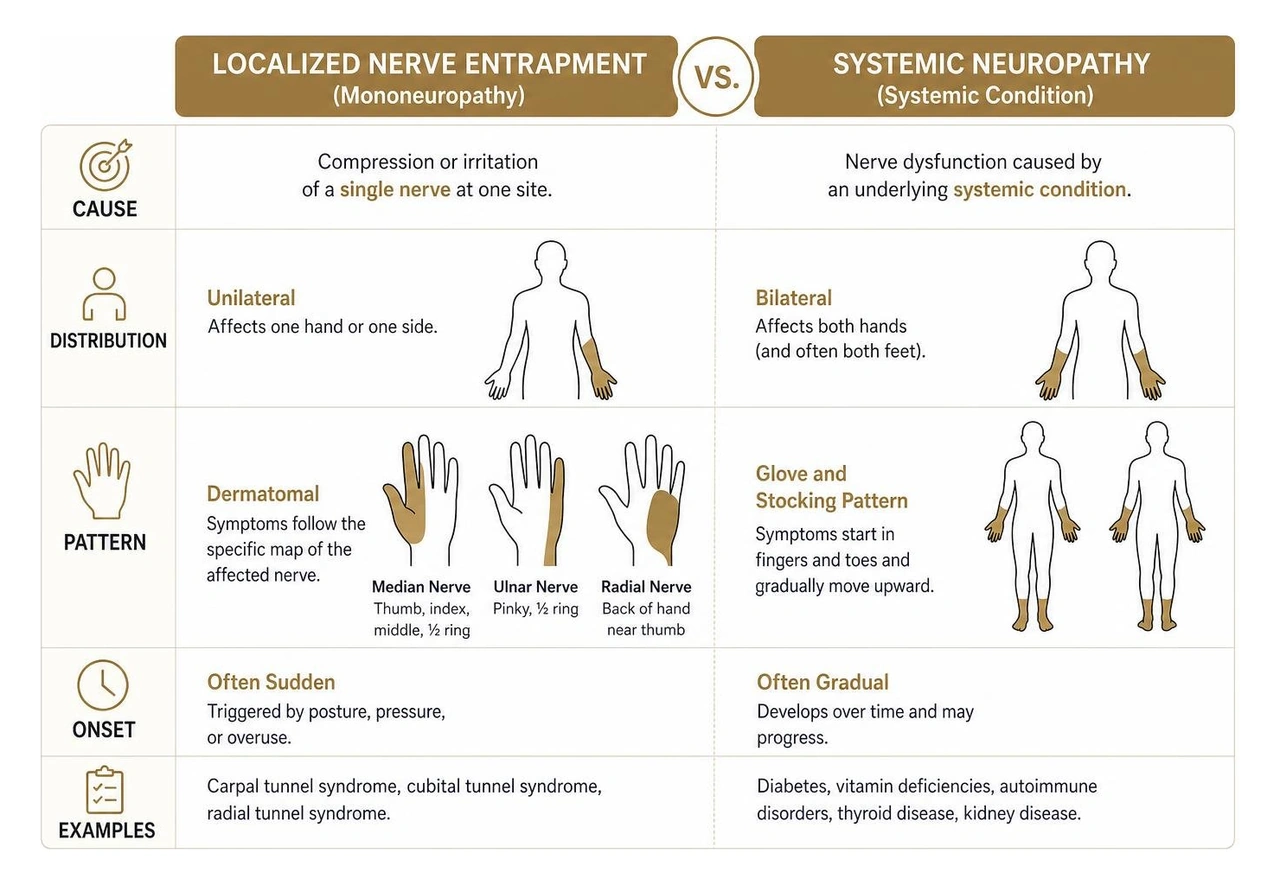
Paresthesia is the formal medical term for abnormal, spontaneous sensations like tingling, prickling, burning, or numbness under the skin. It occurs when a peripheral nerve becomes irritated, compressed, inflamed, or deprived of adequate blood flow, interrupting normal electrical signaling back to the brain.
To understand why paresthesia happens in the hand, it helps to examine the three major sensory nerves supplying the arm and fingers:
When nerve signals are suppressed or blocked, removing that obstruction allows a surge of signals to fire all at once as the nerve "wakes up." This produces the sharp, prickling feeling we call pins and needles. You can learn more about how this sensory phenomenon works in this article on what that pins and needles feeling means. To explore additional triggers, read our guide on what causes tingling and numbness in hands and feet.
Not every episode of hand tingling points to a chronic medical condition. Temporary paresthesia is common and often benign, usually caused by external mechanical factors:
Once you shift positions, release pressure, or return to normal breathing, nerve function and blood supply quickly recover. For a helpful overview of temporary paresthesia symptoms, review the NHS pins and needles guidance.
Determining whether hand tingling is localized or systemic helps narrow down the root cause:
If you are trying to understand broader patterns of sensory loss, you can read this MedlinePlus encyclopedia entry on numbness and tingling.
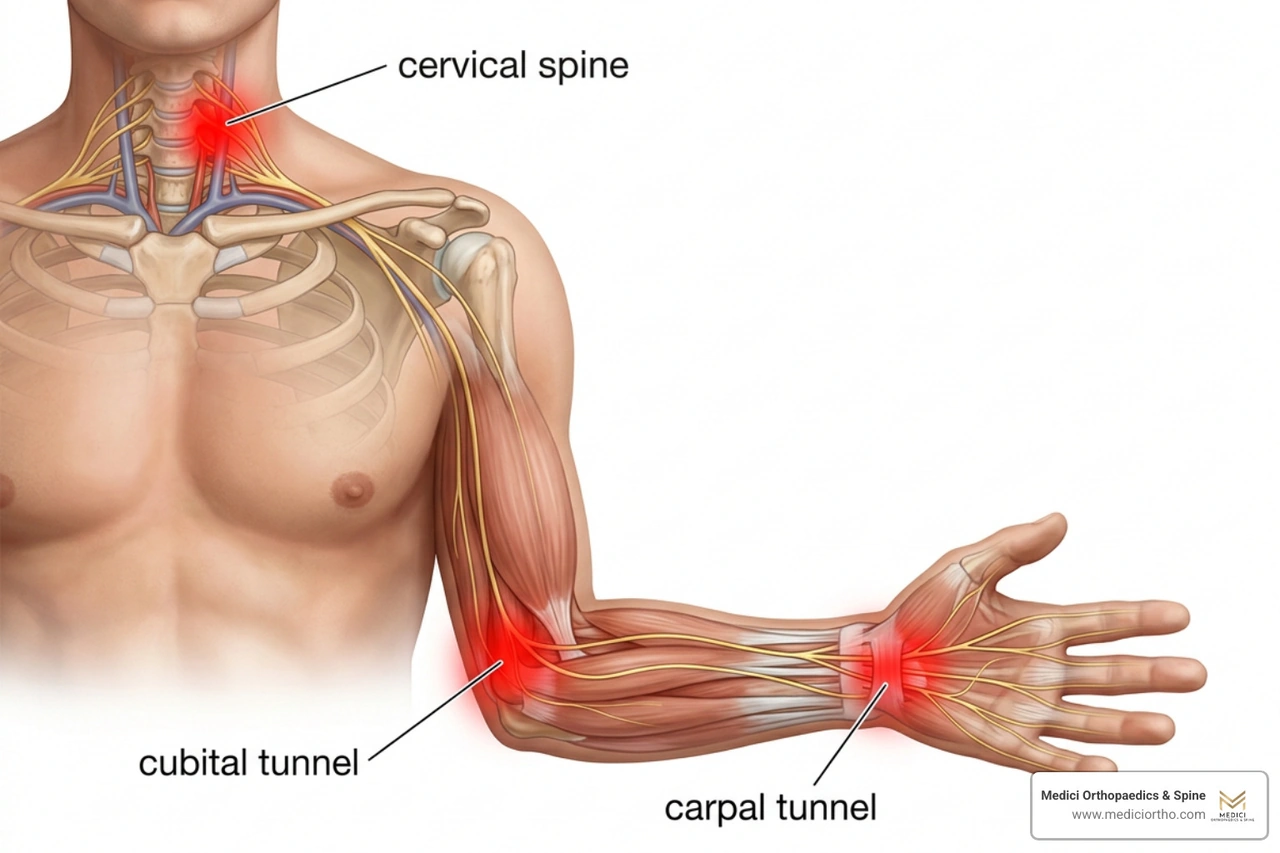
When physical pressure compresses a nerve against nearby bones, muscles, or thickened tendons, it creates mechanical nerve entrapment. Long-term compression can progress from mild pins and needles to persistent numbness, loss of dexterity, and muscle wasting. Comprehensive clinical overviews of single-nerve compressions can be found in the MSD Manual guide to mononeuropathy.
Carpal tunnel syndrome and cubital tunnel syndrome are the two most common localized nerve compressions in the upper extremity. Because each involves a different nerve, they produce distinct symptom patterns across the hand:
For a deeper look into symptoms, diagnostic tests, and treatment approaches, see our complete guide on carpal tunnel syndrome. If your symptoms are centered around your ring and pinky fingers, explore our detailed resource on cubital tunnel syndrome.
Sometimes the true cause of pins and needles in fingers isn't located in the wrist or elbow at all, but higher up in the neck.
Cervical radiculopathy occurs when a nerve root exiting the cervical spine becomes compressed or inflamed. Common structural causes include herniated cervical discs, bulging discs, age-related disc degeneration, and bone spurs (osteoarthritis) that narrow the small openings (foramina) where spinal nerve roots travel.
Key characteristics of cervical radiculopathy include:
You can learn more about spinal nerve irritation from the Mayo Clinic pinched nerve overview. To explore how spine conditions refer symptoms into the upper extremities, read our article on cervical radiculopathy (pinched nerve).
When pins and needles affect both hands or both feet, the issue is often a chronic, systemic breakdown of peripheral nerve fibers known as peripheral neuropathy. Across the United States, over 20 million people live with peripheral neuropathy. In roughly 30% of those cases, no exact underlying trigger can be isolated, leading to a diagnosis of idiopathic peripheral neuropathy.
To understand how widespread nerve damage develops, read our comprehensive overview of peripheral neuralgia or check out the Mayo Clinic guide to peripheral neuropathy.
Diabetes is the single leading cause of chronic peripheral nerve damage, accounting for approximately 30% of all neuropathy cases. Over half of people living with diabetes eventually develop some degree of nerve damage.
Beyond high blood sugar, metabolic, nutritional, and toxic factors can also trigger nerve degeneration:
To learn more about metabolic nerve care, read about diabetic neuropathy and discover what is the best treatment for diabetic neuropathy.
Systemic inflammation and reduced blood circulation can directly affect peripheral nerve function:

Because there are dozens of possible causes for hand tingling, an accurate medical evaluation requires a systematic clinical assessment.
The diagnostic process begins with a physical and neurological examination:
To confirm physical exam findings and precisely locate nerve entrapments, doctors rely on targeted objective testing:
Addressing hand tingling requires a tailored approach that targets the root cause—whether that means adjusting daily habits, using non-invasive therapies, or pursuing specialized interventional treatments.
For mild or temporary symptoms, non-surgical self-care and ergonomic updates can relieve nerve pressure:
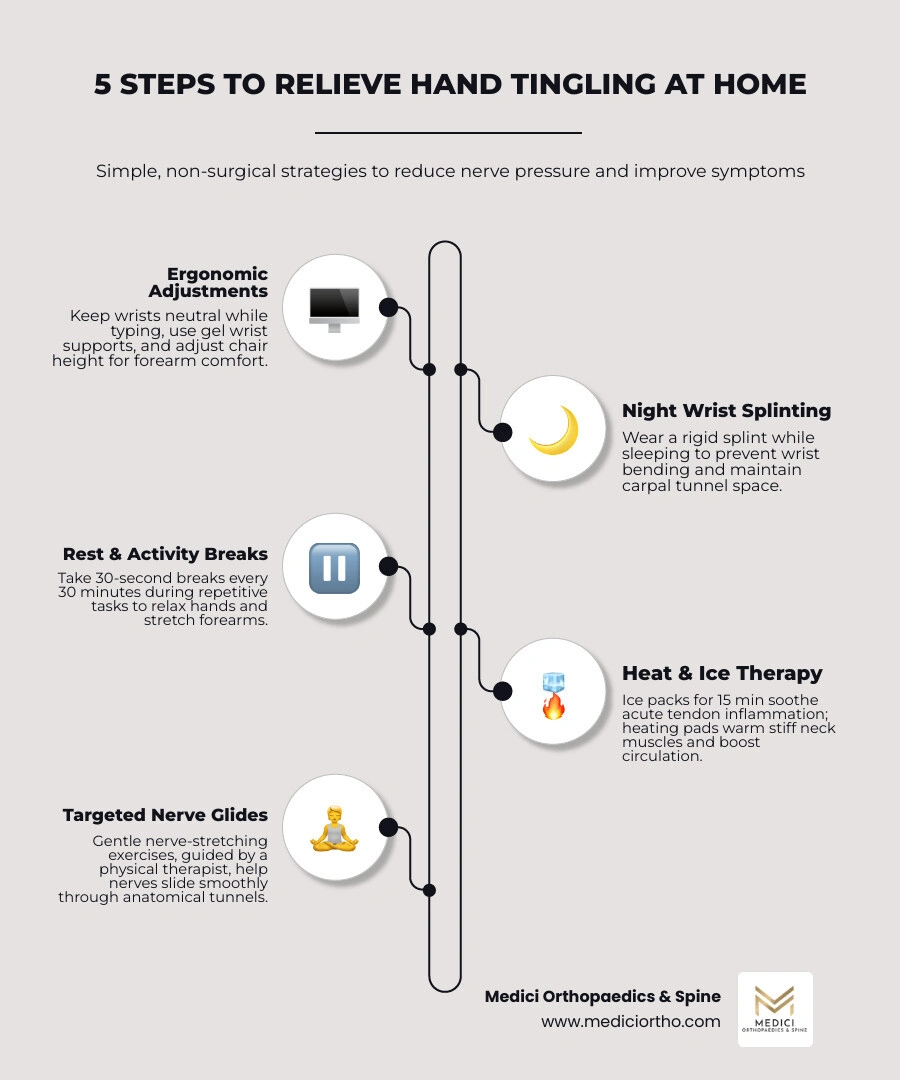
To explore non-medicinal remedies, check out our guide on what are the best at-home remedies for nerve pain. You can also learn how can I relieve tingling in my hands naturally and discover natural remedies to relieve tingling in hands without medication.
When home adjustments aren't enough to manage persistent nerve symptoms, interventional spine treatments and specialized physical medicine offer effective, non-surgical relief:
To evaluate non-surgical care options, read our guide on what causes nerve pain in your hands symptoms causes treatments. If you are near Snellville or Metro Atlanta, explore what are the latest treatment options for neuropathy in Snellville.
While most hand tingling develops gradually, sudden paresthesia can indicate a neurological emergency such as an ischemic stroke.
Seek immediate emergency medical care (call 911) if your hand or finger tingling comes on suddenly and is accompanied by:
Yes. Severe acute anxiety, panic attacks, and high stress levels frequently cause rapid, shallow breathing (hyperventilation).
Hyperventilation lowers the concentration of carbon dioxide in your bloodstream, altering blood pH and temporarily reducing free calcium levels. This temporary chemical shift causes peripheral nerve endings to become overly excitable, triggering pins and needles in the fingers, hands, feet, and around the mouth. Once breathing normalizes and carbon dioxide levels stabilize, the tingling subsides.
Paying attention to your triggers and pain patterns can help narrow down the source:
A thorough neurological evaluation—including physical provocative tests and diagnostic NCV/EMG studies—can confirm the exact source of compression.
Understanding the true cause of pins and needles in fingers is the key to protecting long-term nerve health. Whether your symptoms stem from a temporary posture habit, a compressed nerve in the wrist or neck, or a systemic metabolic condition like diabetic neuropathy, addressing tingling early prevents minor nerve irritation from turning into permanent nerve damage.
At Medici Orthopaedics & Spine, our patient-centered team is dedicated to restoring your quality of life using effective, minimally invasive, and non-surgical care programs. By combining physical therapy, interventional spine procedures, regenerative therapies, and advanced modalities like spinal cord stimulation, we build customized treatment plans designed to address the root cause of your pain.
If recurring pins and needles, numbness, or weakness in your hands is interrupting your daily routine, schedule a consultation with our team. Visit our page on specialized care for neuropathy & neuralgia or contact our offices directly in Snellville, Marietta, Kennesaw, or Buckhead/Atlanta. Let us help you get back to living comfortably and fully.
At Medici, you’re more than your MRI.
We take time to hear your story, understand your pain, and create a plan that actually works for you.

Our team delivers specialist care at convenient locations across Metro Atlanta:
Get expert tips on injury recovery, pain relief, joint health, and movement strategies—straight from our Fellowship-Trained team.






